Best starting point
Standard office paper, kraft paper, and uncoated cardstock generally accept the ink evenly. Use a hard, flat support underneath.
Porous paper gives liquid stamp ink somewhere to absorb. Smooth coated, wet, dusty, textured, or nonporous surfaces behave differently, so a small test impression is always useful.
VIEW ON AMAZON ↗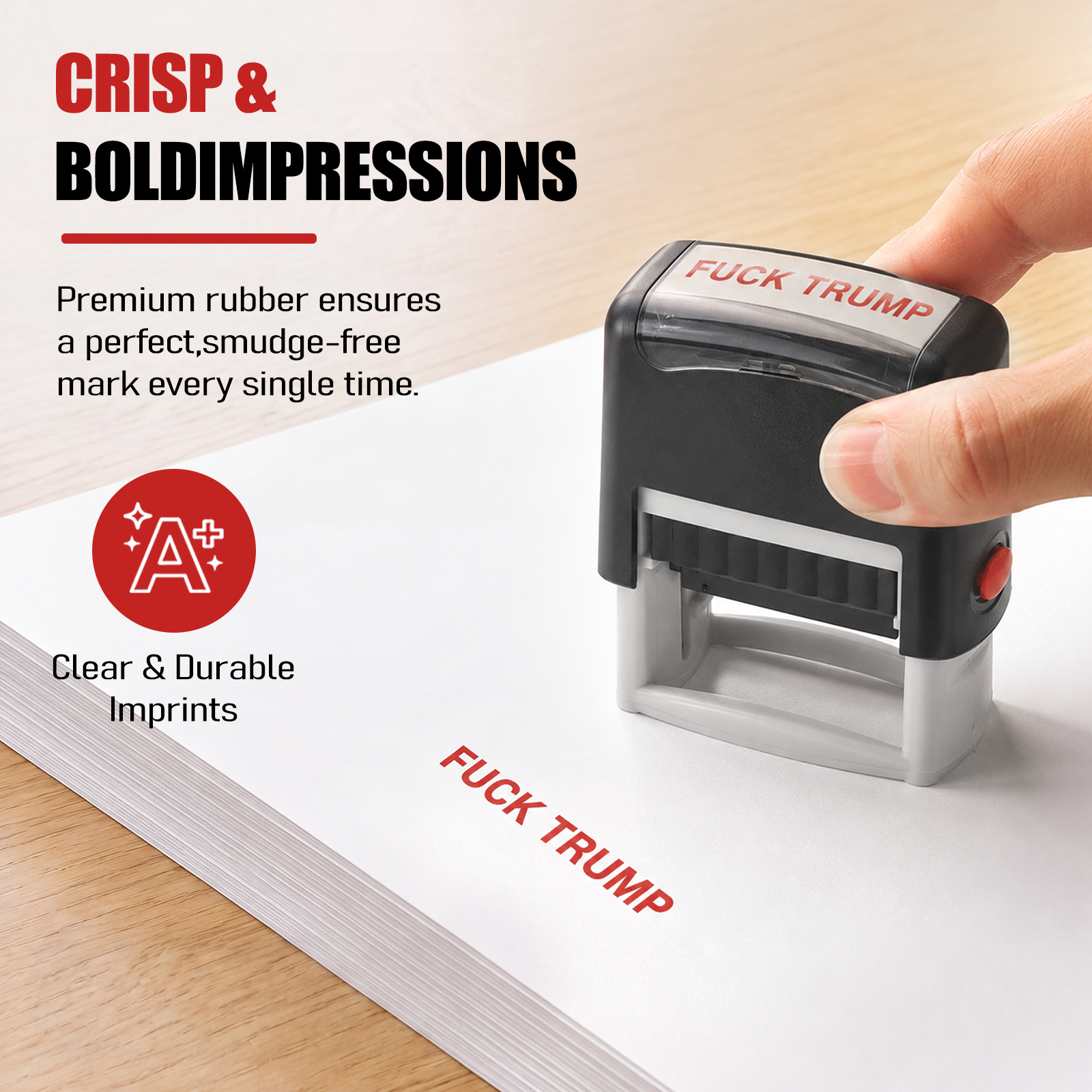
Standard office paper, kraft paper, and uncoated cardstock generally accept the ink evenly. Use a hard, flat support underneath.
Glossy cards, laminated sheets, plastic, metal, fabric, and heavily textured paper may smear, transfer incompletely, or require a different ink formulation.
Remove dust, hold the stamp level, press once without rocking, and lift vertically. Allow the red impression to dry before stacking or touching the material.
You can test it, but standard ink may dry slowly or smear on coated surfaces.
This stamp is supplied with standard red stamp ink, not dedicated textile ink, so fabric results are not guaranteed.
Raised and recessed areas may not contact the text plate evenly. A smoother sheet normally produces a cleaner mark.